How to store coffee beans: the ultimate guide to freshness
Summary
Buying whole bean coffee is the first step toward enjoying an excellent cup, whether you prefer a rich, creamy espresso or a delicate filter brew. Choosing coffee beans means prioritizing quality, but there is a crucial factor you cannot overlook: coffee is a delicate, organic product. If not handled correctly, it can lose its aromatic properties and complex flavor profile in no time.
Knowing how to store coffee beans the right way is the ultimate secret to preserving the essential oils, intensity, and that unmistakable aroma released at the exact moment of grinding. In this practical guide, we will explore the best coffee bean storage solutions, the ideal environments, and the most common mistakes to avoid to keep your coffee as fresh as the day it was roasted.
The 4 enemies of whole bean coffee: what ruins the aroma?
To understand where and how to keep your beans, you must first recognize the environmental factors that accelerate the aging and degradation of the raw ingredient. The freshness of your coffee is constantly threatened by four main elements:
- Air and Oxygen
Oxygen is enemy number one. Prolonged exposure to air causes coffee oxidation, which degrades the natural fats and volatile oils inside the beans. The result? A flat, woody, or stale cup of coffee. - Light and UV Rays
Sunlight and UV rays trigger photochemical reactions that break down the aromatic compounds of the coffee. Leaving your beans in direct light dramatically accelerates how fast they go stale. - Humidity
Coffee beans are hygroscopic, meaning they absorb moisture from their surroundings. Humidity not only alters the essential oils responsible for the flavor, but it also creates the perfect environment for mold and bacteria to grow. - Heat
High temperatures speed up all chemical degradation processes. You should always store your coffee in a cool place, far away from direct heat sources like stoves, ovens, or sunny windows.
Where to store Ccffee beans: the best coffee bean storage
When it comes to how to store coffee beans, your choice of container makes all the difference. One of the most common mistakes is transferring your beans into clear glass jars: while they look beautiful on your kitchen counter, they are not ideal because light accelerates the breakdown of flavors.
To keep your coffee fresh in your pantry, these are the three most effective whole bean coffee storage solutions:
- Stainless Steel or Ceramic Canisters
A high-quality coffee bean container made of stainless steel or ceramic protects your beans from light due to its opaque design. Additionally, these materials are completely inert and won’t transfer any unwanted odors or tastes to your coffee. - Vacuum-Sealed Coffee Canisters
This is one of the premium options on the market. These containers are specifically designed to minimize the presence of air inside the jar, significantly reducing oxidation—one of the main reasons why coffee loses its punch. - Original Coffee Bags with a One-Way Valve
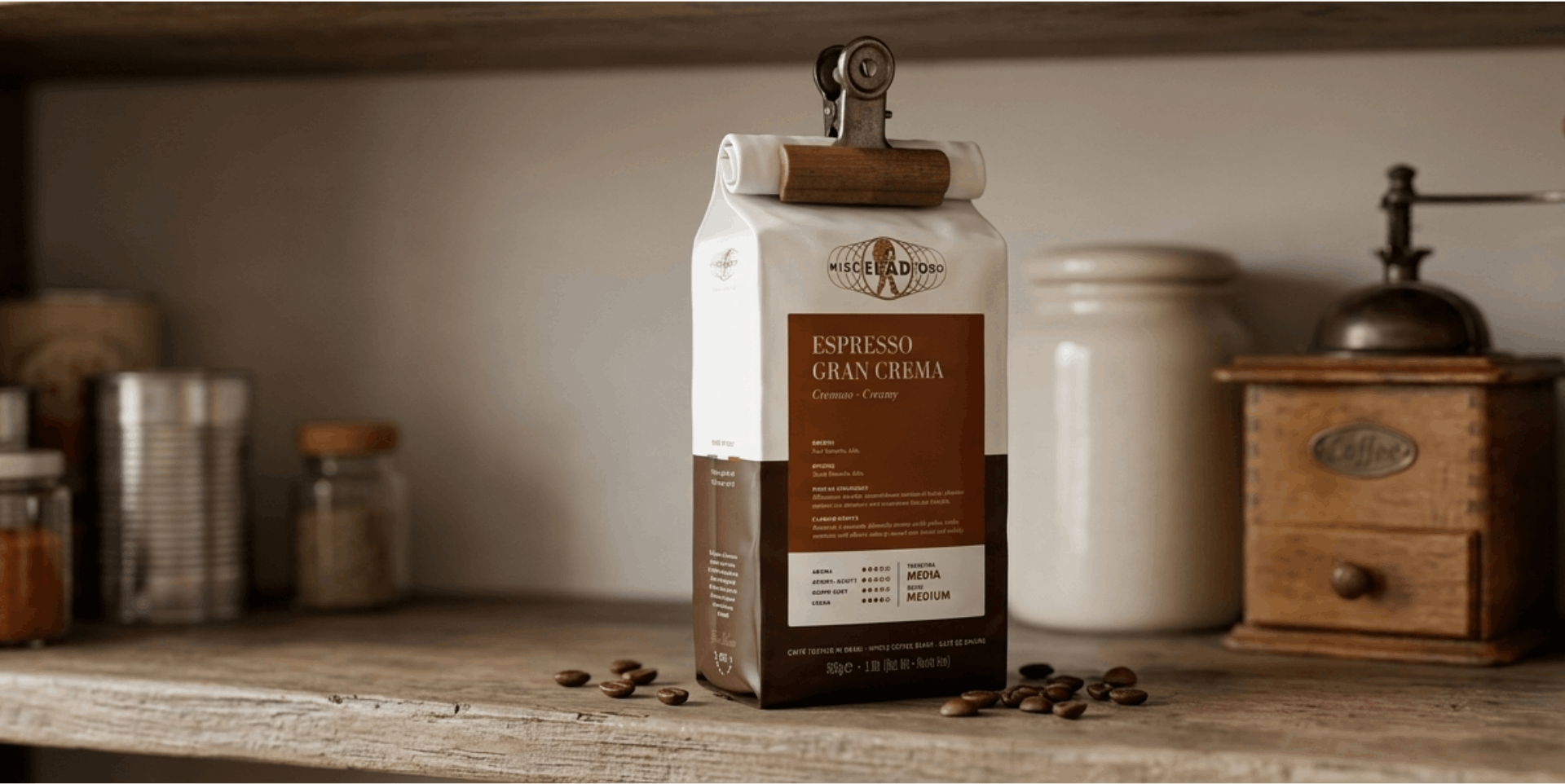
The original packaging can actually be an excellent storage solution, provided it features a one-way degassing valve. This specialized valve allows the natural carbon dioxide gases released by the beans after roasting to escape, while strictly preventing oxygen from entering.
This is exactly the system we use for our 500g coffee beans pack, engineered to protect the beans from the roast house to your kitchen. For proper storage, simply squeeze out the excess air after each use, tightly roll down the top of the bag, and seal it with a bag clip. This keeps your coffee fully protected in its ideal environment, safe from air, light, and moisture.
The big dilemma: should you keep coffee beans in the fridge?
This is one of the most frequently asked questions about coffee bean shelf life. Let’s clear up the confusion once and for all by looking at why this popular habit can backfire.
Keeping coffee beans in the fridge: Why it’s a mistake
Storing your daily coffee in the refrigerator is highly discouraged for two main reasons:
Temperature Fluctuation (Condensation): Every time you take the container out of the fridge to measure your beans and put it back, condensation forms inside. That sudden moisture will ruin the quality of the beans much faster than room temperature would.
Odors: Coffee acts like a sponge. Unless it is perfectly hermetically sealed, it will absorb the smells of other foods in your fridge (like cheese or onions), permanently ruining its flavor profile.
How long do coffee beans last after opening?
Unlike other groceries, coffee doesn’t “spoil” or become toxic after its expiration date, but it does lose its aromatic vibrancy. Instead of focusing strictly on a hard expiration date, it is better to look at the coffee bean shelf life in terms of peak flavor.
How long your coffee stays fresh depends entirely on the packaging and how it is handled after opening. Once you open a bag, we recommend consuming the beans within 2 to 4 weeks to enjoy their full aroma, crisp freshness, and flavor complexity. Past this window, even with flawless storage, you will notice a gradual decline in intensity and richness in your cup.