Decaf Coffee: how it’s made and common myths

Summary
Does decaf coffee contain caffeine? How is caffeine removed from coffee? And can a decaffeinated espresso retain the same aroma and character as a traditional espresso?
Decaf coffee is becoming increasingly popular among people who love the ritual of espresso but want to reduce their caffeine intake. Yet, there are still many misconceptions surrounding decaffeinated coffee. Some people believe it contains absolutely no caffeine, others think it has less flavour, while some assume that removing caffeine necessarily involves harsh chemical processes.
The quality of decaf coffee depends on several factors, including the quality of the green coffee beans, the decaffeination process and how the coffee is subsequently roasted and prepared.
In this guide, we explore how decaf coffee is made, the main methods used to remove caffeine, the most common myths surrounding decaffeinated coffee, and how Miscela d’Oro produces its own decaffeinated coffee.
What is Decaf Coffee?
Decaf coffee is coffee from which most of the naturally occurring caffeine has been removed.
Caffeine is naturally present in coffee beans. The decaffeination process generally takes place while the beans are still green, before roasting.
The aim of decaffeination is not simply to remove caffeine, but to do so while preserving as much as possible of the coffee’s original characteristics, including its aroma, flavour and body.
It is therefore important to understand two things:
- Decaf does not necessarily mean completely caffeine-free.
- Decaf does not necessarily mean less aromatic or less intense.
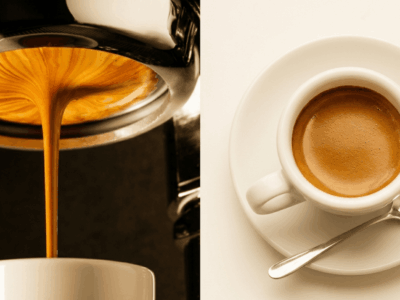
A good decaffeinated espresso can still deliver a rich, well-rounded cup, just like a traditional espresso.
How is caffeine removed from coffee?
Caffeine is removed from coffee through a decaffeination process that takes place before the beans are roasted.
There are several methods of decaffeination. The main approaches use water, specific solvents or carbon dioxide (CO₂) to extract caffeine from green coffee beans.
The principle is relatively straightforward: the caffeine is separated from the beans under controlled conditions, with the aim of minimising the loss of compounds that contribute to the coffee’s aromatic profile.
Why Does the Decaffeination Method Matter?
Because coffee contains much more than caffeine.
Green coffee beans contain numerous compounds that contribute to aroma, flavour and body. A decaffeination process must therefore strike a balance between removing caffeine and preserving the coffee’s characteristic qualities.
This is one of the factors that can distinguish a carefully produced decaf blend from a lower-quality decaffeinated coffee.
What are the main methods of decaffeinating coffee?
There is no single method used to produce decaf coffee.
Water-Based Decaffeination
Some processes use water to extract caffeine from green coffee beans. The challenge is to separate the caffeine while preserving as much as possible of the compounds responsible for the coffee’s aroma and flavour.
Solvent-Based Decaffeination
Other processes use specific food-grade solvents to selectively extract caffeine. These processes are regulated and subject to controls designed to ensure product safety.
Carbon Dioxide (CO₂) Decaffeination
Another method uses carbon dioxide under controlled conditions to extract caffeine from coffee beans. These methods are not all the same: the process used can influence how well the coffee retains its characteristic qualities after decaffeination.
5 Common myths about decaf coffee
Myth 1: Decaf Coffee Contains No Caffeine at All
False. Decaf coffee generally contains small residual amounts of caffeine. The decaffeination process removes most of the caffeine, but not necessarily all of it. For this reason, it is more accurate to describe decaf as coffee with a reduced caffeine content rather than completely caffeine-free coffee.
Myth 2: Decaf Coffee Cannot Be Intense
False. Decaf coffee has long been associated with a weaker, less aromatic flavour. Today, however, the quality of the green coffee beans and advances in decaffeination methods allow for a much wider range of flavour profiles. Intensity and caffeine content are two different things. The body, aroma and perceived intensity of an espresso depend largely on the blend, the roasting process and the extraction method.
A good Italian decaf espresso can therefore be full-bodied, aromatic and persistent on the palate.
Myth 3: All Decaf Coffee Is Made in the Same Way
False. There are several decaffeination processes, each based on different technologies and principles. Understanding which method a producer uses can therefore be helpful when choosing a decaf coffee.
Myth 4: Decaf Coffee Cannot Have a Rich Aroma
False. Decaffeination processes can be designed to preserve as much as possible of the coffee’s aromatic characteristics. The quality of the green coffee beans and the subsequent roasting process remain essential.
Choosing decaf does not mean giving up the pleasure of coffee. After all, coffee is about much more than caffeine: it is a ritual, a moment to savour. Choosing decaf simply means enjoying that ritual in a different way.
Myth 5: Decaf Coffee Is Only for the Evening
False. Decaf coffee can be enjoyed at any time of day. Many people choose it simply because they want to continue enjoying espresso while reducing their overall caffeine intake.
What does “Naturally Decaffeinated” mean?
The term “natural” can be used to describe certain approaches to decaffeination that rely on naturally occurring substances or processes involving water and steam. However, not all decaf coffees are produced in the same way.
When choosing naturally decaffeinated coffee, it is worth checking which process is actually used and which substances are involved in the production process.
How is Miscela d’Oro Decaf Coffee made?
At Miscela d’Oro, we believe that removing caffeine should never mean giving up the character of the coffee.
Our Miscela d’Oro Decaf Coffee is decaffeinated using pure water, steam and an aromatic substance naturally present in coffee, without any other technological processing aids.
The process is designed to reduce the caffeine content while preserving as much as possible of the coffee’s aromatic characteristics.
Our goal is not simply to produce coffee with less caffeine, but to preserve the pleasure, aroma and character of an authentic Italian espresso.
This is the philosophy behind our decaf.
Discover our selection of Italian decaf coffee and find the blend that best suits the way you prepare and enjoy your espresso.