Home Espresso Machines: how to choose and keep it performing
Summary
Preparing a great espresso is not just about the coffee blend—it also requires a reliable machine, proper maintenance, and an understanding of the technical factors that influence the result in the cup.
At home, just like in a café, the espresso machine is the key element that determines crema quality, aroma, and consistency from one extraction to the next.
In this guide, you’ll find the essential criteria for choosing the right home espresso machine, along with a clear maintenance routine to keep it performing at its best over time.
Automatic vs. Manual Espresso Machines: What’s the Difference?
The main difference between automatic and manual espresso machines lies in how much control you want over the extraction process.
Manual and Semi-Automatic Machines
These machines are designed for users who want to adjust grind size, dose, and extraction time themselves.
They offer maximum customization, but require some practice and more attentive cleaning.
They’re ideal for enthusiasts and espresso lovers who want café-style results at home by controlling every variable.
Automatic and Super-Automatic Machines
These models grind, dose, and regulate temperature and pressure on their own.
They deliver convenience, speed, and consistency—perfect if you want a good espresso without managing every step manually.
Why Choose a Semi-Automatic Lever Machine
If you want to understand how espresso responds to different variables:grind size, dose, pressure, and extraction time, a semi-automatic lever machine is the best choice.
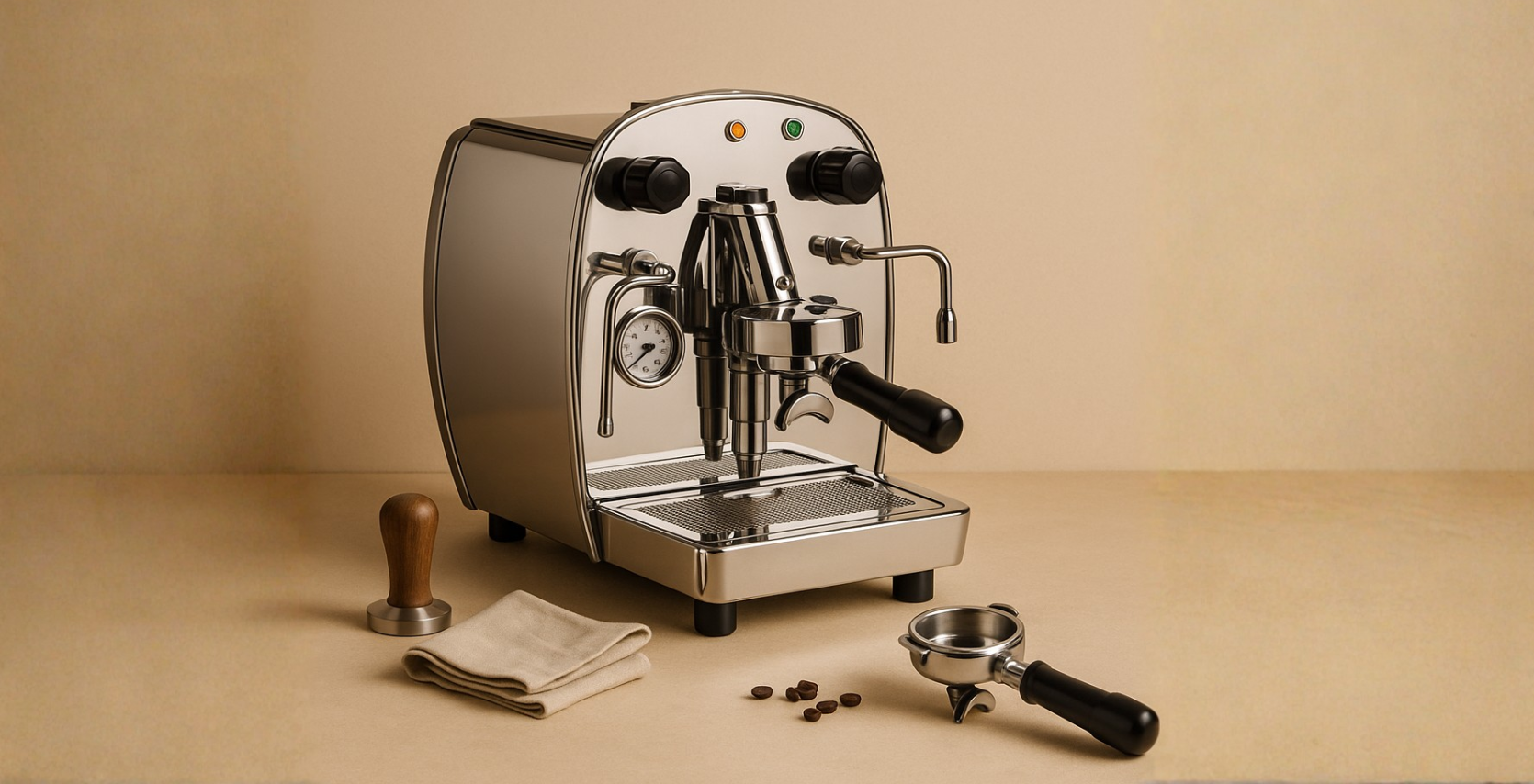
A model built with professional components, such as the Reale Espresso Machine by Royal with a copper boiler and thermocompensated group, allows you to work with precision and achieve consistent, well-balanced extractions at home.
Technical Features to Evaluate Before Buying a Home Espresso Machine
Not all espresso machines are the same. When choosing a home espresso machine, it’s important to understand the components that directly affect coffee quality and the long-term durability of the machine.
- Boiler and Heating System
The boiler is the core of the extraction process. A copper boiler with a heat-exchange (HX) system ensures stable temperature, uniform heat distribution, and more consistent extractions.
Thermal stability is one of the key factors influencing crema quality, aroma, and body. - Pressure and Pump
The pump pushes water through the ground coffee. What matters most is consistent pressure, not just “high pressure” on the label.
A stable pump helps produce dense crema and the correct resistance during extraction. - Thermocompensated Group
A thermocompensated group maintains stable contact temperature between water and coffee, avoiding thermal fluctuations that can affect flavor and texture.
This feature, common in professional machines, is essential for achieving the same quality across multiple extractions. - Steam Wand and Hot Water Outlet
A good steam wand is indispensable if you prepare cappuccinos, latte drinks, teas, or infusions.
Check the material quality, thickness, and ease of cleaning. - Materials and Build Quality
Choose machines made from: stainless steel or high-quality coated aluminum. These materials are more robust, handle heat better, and offer significantly greater durability compared to plastic components.
How to Clean Your Home Espresso Machine (Practical Guide)
Regular cleaning is essential to maintain optimal aroma, pressure, and temperature.
Here is a simple, safe routine you can follow at home.
Daily Cleaning (3–5 minutes)
-
Rinse the portafilter and filter basket with hot water.
-
Wipe the group head with a damp cloth to remove coffee residues.
-
Purge the steam wand after every use and dry it thoroughly.
-
Empty the drip tray and the coffee grounds container.
These quick steps prevent the build-up of oils and residues that can compromise flavour and extraction quality.
Weekly Cleaning: Portafilter, Filter Basket & Group
1. Quick Disassembly: Remove the portafilter, filter basket, and the shower screen or group components (if detachable).
2. Wash With a Specific Espresso Cleaner: Soak the portafilter and filter basket in hot water with an espresso-machine detergent for 10–15 minutes. Use a small brush to remove oils and coffee deposits from all components. Rinse thoroughly and dry completely before reassembling.
Avoid perfumed detergents or general kitchen degreasers—they can leave residues, unwanted aromas, and may damage seals or rubber parts.
Our Recommendation for Quality Espresso at Home
Choosing a good home espresso machine means looking at the right elements: the boiler, the build quality, thermal stability, and how easy the machine is to maintain.
Regular cleaning helps preserve aroma, improve consistency, and extend the machine’s lifespan.
If you’re looking for a reliable semi-automatic solution built with professional components, take a look at the Miscela d’Oro Reale Espresso Machine by Royal, designed to deliver stable, creamy, and well-balanced extractions day after day, right at home.